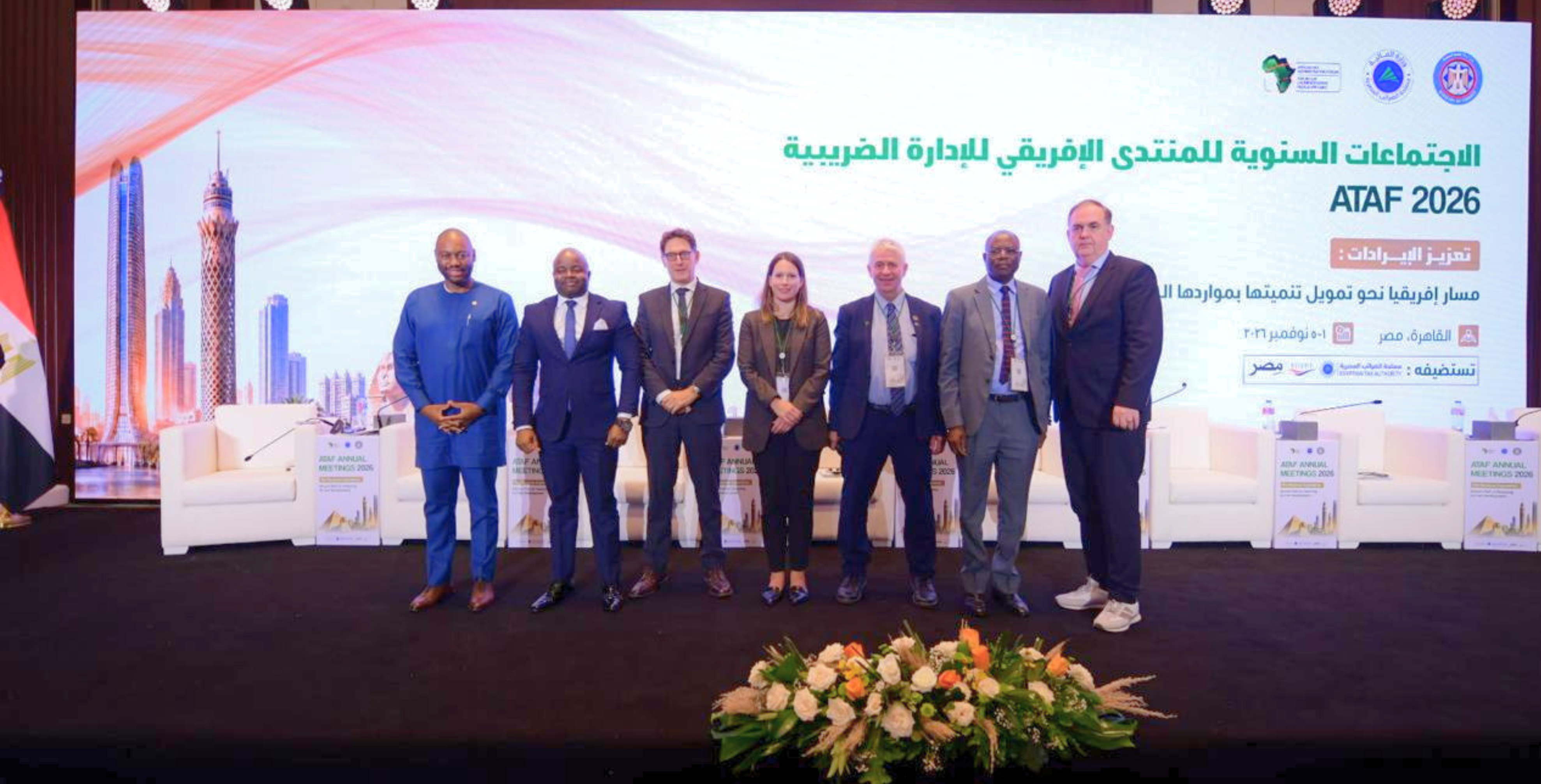
Turning tax commitments into results: ATI joins Africa’s revenue dialogue at the ATAF Annual Meetings in Cairo

Domestic revenue mobilisation (DRM) is central to Africa’s efforts to strengthen fiscal sovereignty, reduce dependence on external financing, and mobilise the resources needed to finance the continent’s development priorities. These questions took centre stage at the 2026 Annual Meetings of the African Tax Administration Forum (ATAF), held in Cairo, Egypt, under the theme “The Revenue Imperative: Africa’s Path to Financing Its Own Development”.
The meetings brought together approximately 460 participants from 38 countries, including representatives of ministries of finance and revenue administrations, development partners, regional and international organisations, academia, civil society, and the private sector. They provided a platform to discuss the policy and institutional reforms needed to strengthen DRM and advance Africa’s financial self-reliance.
The discussions spanned several interconnected priorities: strengthening Africa’s collective voice in international tax cooperation, including the negotiations on the UN Framework Convention on International Tax Cooperation; tackling illicit financial flows; modernising tax administrations through digitalisation; and promoting fair and effective tax systems. A central question running through the meetings was how international commitments and partnerships can translate into concrete, sustained improvements in countries’ capacity to raise revenue.
From global commitments to country-level progress
The Addis Tax Initiative (ATI) Secretariat contributed to this debate through Panel 2, “From Pledges to Practice: Global Partnerships and DRM Delivery Architecture”, which discussed how national authorities, regional organisations, development partners, and international institutions can improve the coordination, delivery, and monitoring of DRM support.
The discussion took place against the backdrop of the Compromiso de Sevilla and its commitment to at least double development-partner support for DRM by 2030. While increasing support is important, participants stressed that its effectiveness depends on how well it responds to countries’ priorities and institutional needs. Fragmented technical assistance, overlapping interventions, and short-term support can limit the impact and sustainability of reform efforts. Stronger country ownership, clearer responsibilities, and better coordination are therefore essential.
“”
Fragmented technical assistance, overlapping interventions, and short-term support can limit the impact and sustainability of reform efforts. Stronger country ownership, clearer responsibilities, and better coordination are therefore essential.

Representing the ATI Secretariat, Harald Küppers, Head of the ATI Secretariat, presented the ATI monitoring framework as a relevant instrument for tracking commitments made by ATI members on DRM and assessing progress. The framework can help promote transparency and mutual accountability, identify implementation gaps, and highlight areas where further support may be needed.
This also opened an opportunity to explore closer cooperation between ATI and ATAF on monitoring commitments and progress in Africa. By combining ATI’s monitoring approach with ATAF’s regional expertise and engagement with African tax administrations, the two organisations could examine how existing information and indicators can be used more effectively. A possible starting point would be to review available monitoring data and identify compatible indicators, while building on existing arrangements rather than creating additional reporting requirements for partner countries.
What does this mean for ATI members?
The discussions in Cairo highlighted several issues with direct relevance for ATI members and their efforts to advance sustainable DRM reforms.
First, revenue performance remains uneven across the continent. According to the African Tax Outlook, the average tax-to-GDP ratio across 39 African countries stood at 15.1%. However, this figure conceals substantial differences between countries. Improving revenue performance is therefore an important part of expanding fiscal space and contributing to the financing of the Sustainable Development Goals.
Second, higher revenue collection does not automatically lead to higher development spending. In countries facing debt stress, a significant share of additional revenue may be absorbed by debt-servicing obligations. Progress on DRM therefore needs to go hand in hand with sound debt management and more effective use of public resources.
Finally, sustainable revenue gains depend on strong institutions and long-term capacity. Technical assistance needs to support nationally defined strategies and strengthen the skills of tax officials, data systems, compliance management, governance arrangements and taxpayer services. Regional tax organisations such as ATAF also have an important role in connecting country demand with partner expertise, facilitating peer learning and helping to improve the coherence of support.
Alongside its contribution to the panel, the ATI Secretariat engaged with different country representatives, introducing the ATI and exploring their potential interest in membership, as well as met with the OECD’s Global Forum on Transparency and Exchange of Information for Tax Purposes to discuss possible areas of collaboration on exchange of information, in line with the work of ATI’s Consultative Group 3 on combating tax-related illicit financial flows.
“”
Delivering on global DRM commitments requires more than pledges and additional resources. It calls for country-led reforms, coordinated and sustained support, capable tax administrations and monitoring arrangements that make progress visible and strengthen accountability.
The exchanges in Cairo reinforced a clear message: delivering on global DRM commitments requires more than pledges and additional resources. It calls for country-led reforms, coordinated and sustained support, capable tax administrations, and monitoring arrangements that make progress visible and strengthen accountability.
The ATI Secretariat warmly thanks ATAF and the Egyptian Tax Authority for the organisation of the Annual Meetings and for the invitation to contribute to these important discussions.